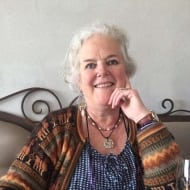
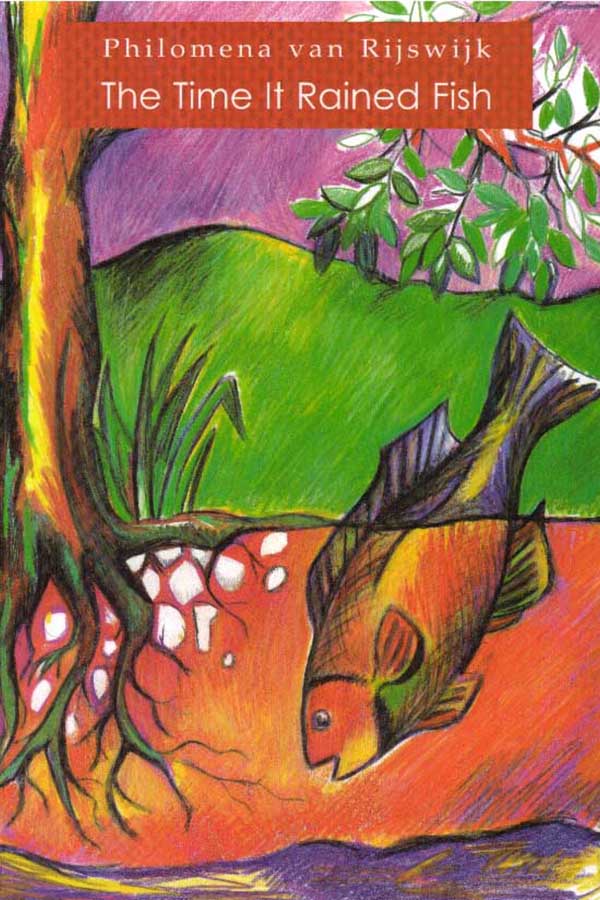
Interview with Australian Author – Philomena van Rijswijk
“Australian Authors” – Tell us a little about yourself? Perhaps something not many people know?
Philomena – Although I’m generally known as a “Tasmanian author”, I grew up in Blacktown, NSW, and only moved to Tasmania when I was 28 years old. My heritage is mostly Irish, but my maternal grandmother was from Prussian/Silesian parentage. The Prussians were Australia’s first asylum-seekers. They settled in Harkaway in Victoria. My two brothers and older sister were pretty isolated when we were growing up. My father had a mental illness, and, in those days, families kept things like that to themselves. My father served as a radio-operator in New Guinea in WW2, and mum signed up with the Australian Women’s Land Army for four years. We were brought up very Catholic. Mum had eight Irish cousins straight out of Cork. They were our only extended family, for much of our childhood. My sister left home to join the convent when she was 14. She left when she was 46. St Philomena was a Greek girl (“daughter of light”: filumina) who rejected the advances of the Roman Emperor, Diocletian. He had her tortured and had her thrown off a cliff with an anchor around her waist. She is the Patron Saint of childbirth. Some people say that she was really a pagan goddess who was turned into a saint. I tell people that I have spent my life trying to reverse the process.
“Australian Authors” – What made you want to become a writer?
Philomena – My father slept in a dingy room at the back of our house. It was unlined and had only a single bed and a wardrobe in it. On top of the wardrobe was Aunty Molly’s enormous, black Olivetti typewriter. I used to stand on Dad’s bed, lean across the abyss, and type stories. One of the first ones was a moralistic tale entitled: “Why he Red Sea is Red”, based on the Old Testament, or a version thereof. I also wrote a poem about the weeping willow. My teacher, Madame Stent, thought it wonderful, and made me read it out to the class. I always knew I would be a writer. It was the only way I knew of to record my thoughts, which, I believed, were notable! I have always had opinions on most things. Writing makes sense of the world, for me. It helps me get over things, and start afresh the next day. I love writing novels, as I can create whole worlds. I’m so glad I didn’t have to resign myself to living only one life…
“Australian Authors” – Now, the big question, are you working on another book?
Philomena – I have just had a speculative fiction/dystopian novel accepted by Tartarus Press, UK. They are going to publish it as a hardcover, “collectors’ edition”, and an ebook. It is called “The Bishop, the Gypsy and the Dancing Bear”, and it is a mythology addressing the ideas of borders and migration. Other than that, I work fairly sporadically on poems and short stories.
“Australian Authors” – What genres do you prefer to write in?
Philomena – I love writing in a quirky way that makes people refer to my novels as “magic realism”, though I didn’t really set out to write in any particular “genre”. I don’t believe creativity works that way. The adjective should describe the work, and not the other way around. I tend to read a lot of non-contemporary work. I spent two years reading poetry, without touching a novel, some years ago. It was great! I discovered many poets that I hadn’t known about, or, at least, hadn’t spent enough time reading. I love Pablo Neruda (my budgies are named Neftali and Mathilde, after the poet and his wife, ‘though my German friend tells me they speak German to him, and disdain speaking Spanish). I love Rilke and Paz, and Huidobro…Poetry can be such a liberation! My poet friend, Edith Speers, and I used to often talk about “beige poetry”…that lifeless academic poetry that seems to suck the life out of you. I love short stories. Martic Flanagan once said something very nice about my short stories.
“Australian Authors” – What do you think about the ebook revolution?
Philomena – The ebook revolution is great! Publishers (big publishers) have become more like insurance agencies than sponsors of the arts. e-publishing puts the power back where it belongs; in the hands of the creators…
“Australian Authors” – Do you start a book with a definite plot, or do you just write?
Philomena – I start to write, and, after a while, I start to sense where the story is headed, and then I do some planning.
“Australian Authors” – Do your characters seem to hijack the story, or are you always in control?
Philomena – Oh, I’m always in control…’though I can really fall in love with a character. I adored Big Jim Naracoopa in “The World as a Clockface”…
“Australian Authors” – Are your characters based on real people or completely imagined?
Philomena – My characters can be sparked off by a real person, but, sometimes, by a picture in National Geographic. I make scrapbooks of people and places for each novel.
“Australian Authors” – Who are your favourite authors?
Philomena – My favourite authors are John Steinbeck, Ruth Park, Marjorie Kinnan-Rawlings, DH Lawrence, Thomas Hardy, Alice Munro…I don’t read much contemporary stuff. I usually buy non-fiction!
“Australian Authors” – What’s your advice to Authors? On writing? Publishing? Marketing?
Philomena – I would say: “Marketing, shmarketing!”…writing is an art. Don’t let the bean-counters tell you whether or not you are a writer. It’s nice to be acknowledged, but it’s not the essence of being a writer. Keep your passion!