Author Interview

Interview with Australian Author – Lachlan Walter

“Australian Authors” – Tell us a little about yourself? Perhaps something not many people know?

Lachlan – I’m a writer and a nursery-hand. Once upon a time, I was a musician and a cook. I’m a country boy living in the city, a working class intellectual, a cynical optimist, a Doctor of Literature who avoids academia, an outdoorsy bookworm, a highly-motivated daydreamer, a lover not a fighter, a hippy who eschews dreadlocks, tribal-chic, drum circles and earnestness.

I also have webbed feet (or toes, to be specific, though just a couple of them).

“Australian Authors” – What made you want to become a writer?

Lachlan – I’ve loved books and stories ever since I was a little kid, but I didn’t start writing until late high school: poems and short fiction, the usual teenage stuff. I kept writing during my early twenties, submitting the odd piece of work but never taking it seriously. And then one day I just stopped.

Nearly a decade later, I returned to university to finish a Bachelor’s Degree that life had gotten in the way of. As I kept on through my degree, I took some writing classes, and rediscovered my passion for writing. I practised and practised, writing my way through a lot of crap before I got to the beginnings of the good stuff. The opportunity arose to do a PhD, which would encompass writing a novel and a piece of literary criticism. I seized it, knowing that here was the perfect environment to bring The Rain Never Came to life, and to turn myself into a writer.

“Australian Authors” – What gives you inspiration for your book(s)?

Lachlan – Like most writers of science fiction/speculative fiction, the big ideas at the heart of my stories are really just frameworks upon which I can hang explorations of the ways in which people might react to their new situations and new worlds. After all, an idea isn’t a story—it’s more like a spark—a spark that ignites a fire. As I want my fires to contain what-ifs and maybes (that nonetheless still connect to the world we live in), I’m always on the lookout for real-life stories that seem to point towards our future—changes in technology, politics, culture, the environment, medical science, communication devices, interpersonal relationships, infrastructure systems, and organizational, learning and teaching methods.

And then it’s just a matter of extrapolating a new idea from any particular real-life stories that grab me, and working out how this new idea might affect everyday people. To do this, I rely on every writer’s trick: observing and eavesdropping, creating characters and situations by recombining the people I know and see and the minutiae of life around me. Once I’ve got the first inklings of my characters and a plot, I then tend to just spend time with them and let them reveal themselves through the process of writing—their formation should be a bottom-up process, based on attempts at realistic actions and reactions, rather than a top-down process, whereby the stricture of a predetermined plot guides them with an unwavering hand.

“Australian Authors” – Now, the big question, are you working on another book?

Lachlan – I like to have a lot of projects on the go at once—the trick is knowing which one to focus on first, something I’m not that good at. And so right now, I’m wrangling my focus and making steady progress on both an Australian-set piece of climate fiction examining the importance of family and friends, and an offbeat piece of metafictional science fiction.

Did I really just use the word offbeat?

“Australian Authors” – What genres do you prefer to write in?

Lachlan – I’ve always written within speculative fiction: typically science fiction and post-apocalyptic fiction, with the odd detour.

Like many science fiction writers who grew up during the 1980s, I was a nerdy kid surrounded by a media landscape saturated with science fiction, and living through a point in time in which the genre’s terminology and motifs were being absorbed into our cultural language. To an enquiring mind that soaked up external stimuli like a sponge – especially one obsessed with books, giant monsters, Ghostbusters and Star Wars – science fiction seemed like the logical way to express and understand the influence of this changing world.

And then there’s science fiction’s ability to make us question what we know, by reframing it as a ‘what if?’ and then digging deep. To this particular fan, the ability of science fiction to open our eyes to what is by showing us what it might become, is nothing short of genius.

“Australian Authors” – What do you think about the ebook revolution?

Lachlan

“Australian Authors” – Do you start a book with a definite plot, or do you just write?

Lachlan Walter – I use the big ideas at the heart of my stories to allow me to explore the ways in which people might react to their new situations and new worlds, which have been caused by these ideas. After all, an idea isn’t a story, it’s just an idea. And it’s only useful in a story as a nifty thought-experiment that allows a hitherto unseen exploration of our own lives and what us human. To do this, I rely on every writer’s trick: observing and eavesdropping, creating characters and situations based on people I know and see, and on the minutiae of life around me. Once I’ve got a loose grip on my characters and a plot, I then spend some time with them, letting reveal themselves through the process of writing – their formation should be a bottoms-up process, based on attempts at the way people really would behave in any given situation, rather than a top-down process in which a predetermined plot guides them with an unwavering hand.

“Australian Authors” – Pen or type writer or computer?

Lachlan

“Australian Authors” – Do your characters seem to hijack the story, or are you always in control?

Lachlan

“Australian Authors” – Are your characters based on real people or completely imagined?

Lachlan – I think I speak for many writers in saying that I don’t so much model my characters after real people, but rather appropriate aspects of real people and attribute them to my characters. This is certainly the case with The Rain Never Came – no single character is based on a real person, but the same can’t be said for some of their behaviours, mannerisms, figures-of-speech and peculiarities, not to mention some of the character interactions.

We’re fascinating creatures with individual habits and quirks that would seem odd, if not bizarre, to anyone but ourselves. And so, to make a character more human and alive, these habits and quirks need to shine through, even if only subtly. The trouble here is that making up a quirk or habit can seem ridiculous, even if only to ourselves – which can then have a knock-on effect on our confidence and flow.

This is why it’s okay to occasionally steal things from real life and give them to your characters – sometimes the truth really is stranger, more interesting and more convincing than fiction.

“Australian Authors” – Have you thought about joining with another author to write a book?

Lachlan

“Australian Authors” – Who are your favourite authors?

Lachlan Walter – I like those writers who have a singular ‘voice’ and focus on the emotional states of their characters, and on their characters’ psychological development. Within science fiction/speculative fiction, these kinds of writers normally use their science fiction ideas as a framework to support an exploration of these states and developments, rather than as an end unto themselves: people like J. G. Ballard, Kurt Vonnegut, Debra Biancotti, Steven Amsterdam and Margaret Atwood. Their work, while full of ideas, is truly memorable for the way it makes us feel, rather than the way they make us think.

Outside the umbrella of science fiction, I like writers who do the same kind of thing, and possess a similarly singular voice and focus on the emotional and psychological states of their characters: Charles Bukowski, William Kotzwinkle, Katherine Dunn, Franz Kafka and Peter Carey.

“Australian Authors” – What’s your advice to Authors? On writing? Publishing? Marketing?

Lachlan – If you want to write, all you need to do is keep at it. No-one is born a great writer, bar the odd savant – like all creative arts, writing is something you need to practise and practise and practise. By writing as much as you can whenever you can, and keeping your chin up as you wade through the shit, you’ll eventually get there.

But remember, despite what some people say, there are no real rules when it comes to writing. Everyone has their own methods and means, their own rituals and routines; what works for some doesn’t work for others. Finding your own system is what’s important, and probably the only thing that I hazard all writers would agree upon, alongside the necessity of practise and perseverance.

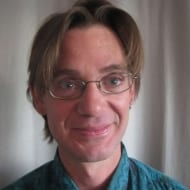
Click Image for Profile
Lachlan’s Books

Author Interview

Interview with Australian Author – Vicki Wilson

“Australian Authors” – Tell us a little about yourself? Perhaps something not many people know?

Vicki – Some of my favourite memories growing up are me telling stories to my younger brothers. They would always beg for a tale, and giggle as I told them some wild and relentlessly tall yarn. They were my first audience (other than my mum and dad) who seemed to truly adore my vivid imagination and sense of humour.

“Australian Authors” – What made you want to become a writer?

Vicki – I have always written, for as long as I can remember. I still have copies of all of my earliest drafts complete with my mum’s red pen editing spelling and punctuation. Treasured possessions! I have always adored language; how I can write a word (apple) or a whole string of them (a rotten green apple complete with a twisted, but satisfyingly fat, worm) and suddenly the picture in my head is now in yours, all without saying a thing. It is the best, and most dangerous, kind of magic.

“Australian Authors” – What gives you inspiration for your book(s)?

Vicki – Without wanting to appear boring; life. Or at least my take on it. Everything I write about is an experience I have lived through, coloured in romanticism and abstraction and sometimes years of thought.

“Australian Authors” – Now, the big question, are you working on another book?

Vicki – Yes! Currently I am in the midst of editing my manuscript of a twisted fable. I have always adored fairy tales and fables, especially the darker versions. They are so universal and resonate, even in today’s fast paced lifestyle. It was my grandiose intent to craft my own, inspired by those that have come before, as a nod to storytellers everywhere. You can follow that stop-start journey by way of my facebook page: https://www.facebook.com/dragonflypublishing.au/

“Australian Authors” – What genres do you prefer to write in?

Vicki – Genre isn’t something I think about. It is merely something that comes afterwards when everything is finished and it requires categorisation. I have an illustrated children’s book, poetry, short stories, mysteries and ‘urban noir’. If I were to categorise it, I would say my writing is always a little dark, a little twisted, and a lot romantic (in an ‘mind’ as opposed to ‘heart’ kind of way).

“Australian Authors” – What do you think about the ebook revolution?

Vicki – I applaud it’s versatility, the ease of access, the opening up of the market to authors who would not have had the opportunity otherwise. Technology now allows writers to truly have a voice, to tell our story, without being hampered by the restrictions of suits and “pop” culture. As with everything however, the power of eBooks is a double-edged sword. Their popularity has impacted the quality of the work that is out there. Words are driven by the need for more content as opposed to more quality/imagination. As such ebooks have disrupted the ‘art’ of writing, turning it into a way to make money as opposed to a way to be heard. My objection to this other side of ebooks is why my first book was published in paper, I wanted to create art, not only with the story and the illustrations but also with vessel. The paper choice, the cover design, the weight and feel, all come together to present a whole image to the reader, a whole experience. And that is a wonderful thing.

“Australian Authors” – Do you start a book with a definite plot, or do you just write?

Vicki – I write. Life doesn’t have a plan, so nor do my stories.

“Australian Authors” – Pen or type writer or computer?

Vicki – Would you believe that I wrote my second manuscript entirely on my phone? I brainstorm and mind map on paper, write on whatever I have on hand at the time (pen, phone, computer) and redraft on my PC. For editing I need the bigger landscape in order to see everything clearly. I would write on the walls if I could.

“Australian Authors” – Do your characters seem to hijack the story, or are you always in control?

Vicki – I am in control but my characters will tell me if I am trying to get them to do something they just wouldn’t do. I always see them standing off to the side with their arms crossed looking petulant. That is when I know I am going down the wrong path.

“Australian Authors” – Are your characters based on real people or completely imagined?

Vicki – A little from column A and a lot from column B. People are so complex, I spend a lot of time observing them. If I am intrigued by something, a small habit or phrase unique to someone I may create something similar. People are quirky, I think characters in stories need that quirkiness in order for them to feel real.

“Australian Authors” – Have you thought about joining with another author to write a book?

Vicki – All of the time! As with most things in life, if you find the right person, the symbiotic energy created from bouncing off each other is almost explosive. It is a great driving force to meet deadlines, to challenge personal creative boundaries, and to meet a higher standard.

“Australian Authors” – Who are your favourite authors?

Vicki – Francis Hardinge – hands down, all time favourite. Brilliant author.
Patrick Rothfuss – astoundingly good.
James McGee – deceptively simple.

“Australian Authors” – What’s your advice to Authors? On writing? Publishing? Marketing?

Vicki – I have the privilege of being absolutely no-one. I am a person with a pen and a love of words. I write what I enjoy, what I want to read, that isn’t out there. If you are an author in the same boat, then what I will say is this, trust yourself. You are your audience. Someone out there will hear what you are saying, if you write with integrity (i.e. you are being true to your story). Trust yourself, and never underestimate the universality of the human experience.

Author Interview

Interview with Australian Author – Richard Carroll

“Australian Authors” – Tell us a little about yourself? Perhaps something not many people know?

Richard – I first left Australia aged twenty excited at the prospect of discovering the world. Over the years, the more I travelled the heavier my backpack became as I replaced non-essentials such as clothes with books. Travelling through Europe, the US and then overland through Asia, living and working in diverse countries was a huge learning experience. For many years I read only nonfiction as I learnt about religion, philosophy, society, culture, the environment and so on. The first time I put pen to paper (apart from the rare letter home) was during a writing retreat in the south of France. Poetry was my preferred mode at the time and I eventually compiled a collection which has never seen the light of day. All these life experiences have contributed to how I see the world and the way I now write historical fiction.

“Australian Authors” – What made you want to become a writer?

Richard – I have always been an avid reader but only came to writing in my thirties when I started with poetry. In what seems like another life I taught astrology and when my students suggested I write down my teachings I did so. My book on astrology and meditation was published (in French) in Switzerland. As a teacher (ESL, astrology) I tried to make learning fun. The environment and nature are of great interest to me and I wanted to create a learning resource on the subject that was fun and exciting for students. My next work was a workbook for secondary students that explores ecosystems and Indigenous peoples of the world. Historical fiction has always been a preferred genre with the likes of James Michener, Ken Follett, Bernard Cornwall, Kate Grenville, Wilbur Smith, Margaret Atwood, Conn Iggulden, Tom Keneally, Diana Gabaldon, Peter Carey etc. among my favourites. I am fascinated by history and these authors offered a window to the past: the cultures, customs and beliefs of our predecessors. In 2004 I fulfilled a lifetime ambition and did a BA at university with majors in writing and environmental studies. I then set up a website for Francophiles before continuing my studies through Honours (a memoir set in France) followed by a PhD in creative writing. The PhD involved writing an exegesis on authenticity and the historical novel and writing the novel “Turrwan” set mostly in Queensland in the nineteenth century. Feedback from readers of “Turrwan” led me to expand the story of the Petrie family into a saga spanning one hundred years

“Australian Authors” – What gives you inspiration for your book(s)?

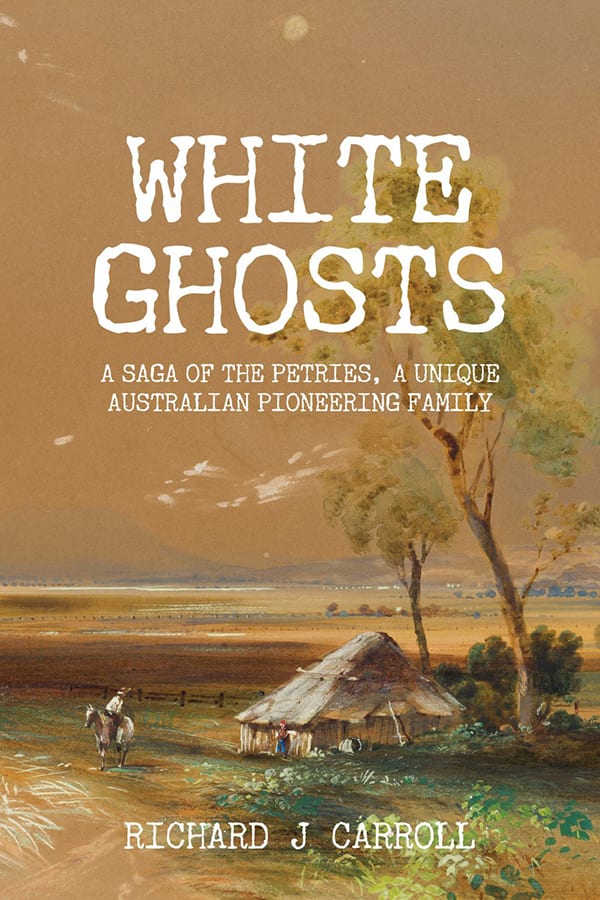
Richard – My first novel “Turrwan” was inspired by the story of Tom Petrie who arrived at the Moreton Bay Penal Colony with his parents in 1837. Six-year-old Tom grew up with the local Aboriginal people, learnt their language and became initiated as one of the clan. There are very few novels treating Queensland’s early history and relationships between blacks and whites on the violent frontier. Tom’s daughter Constance recorded her father’s experiences which were published as “Tom Petrie’s Reminiscences of Early Queensland” in 1904. This work, recognized as an authority on Aboriginal customs, stories and beliefs, was the foundation on which my novel was built. My second novel “White Ghosts” begins in 1824 and recounts the arrival of the first whites to settle in Queensland and the consequent establishment of Brisbane. The past holds many lessons that can help us understand the present.

“Australian Authors” – Now, the big question, are you working on another book?

Richard – Yes, I am. I’m working on a story set in the coal-mining ghost town of Mt Mulligan about 100 km due west of Cairns in Far North Queensland where I spent the first four years of my life until the mine was closed down in 1957. The mountain, Ngarrabullgan as it is known to the Kuku Djungan, is one of the most sacred and oldest sites in Queensland with proof of human habitation dating back 40,000 years. What the local Aboriginal people know as the birthplace of the Rainbow Serpent is a tabletop mountain 18 km long by 6.5 km wide and rising between 200 to 400 metres above the surrounding countryside. In 1876, intrepid explorer James Venture Mulligan discovered payable gold along the Hodgkinson River which flows along the eastern flank of the monolith (ten times bigger than Uluru). Miners flooded to the area but the field was never as rich as the Palmer to the north. When coal was discovered under the mountain in 1907 the gold had petered out. On a September morning in 1921 a massive explosion rocked the mine resulting in the death of all 75 men working underground at the time. Aboriginal people are supposed to have said that it was retribution for digging into the sacred mountain. The only original building remaining is the hospital which is now the homestead for a working cattle ranch that welcomes visitors.

“Australian Authors” – What genres do you prefer to write in?

Richard – Historical fiction has always been a preferred genre with the likes of James Michener, Ken Follett, Bernard Cornwall, Kate Grenville, Wilbur Smith, Margaret Atwood, Conn Iggulden, Tom Keneally, Diana Gabaldon, Peter Carey etc. among my favourites. I am fascinated by history and these authors offered a window to the past: the cultures, customs and beliefs of our predecessors.

“Australian Authors” – What do you think about the ebook revolution?

Richard – At first it looked like the ebook revolution would lead to the demise of the physical book but this has not been the case. The advantage of the ebook is the low cost as it allows for greater access to stories worldwide without the sometimes prohibitive cost of freight. Personally, I prefer the feel of a book, its weight, the crisp paper, even the smell emanating from the pages and also because it too has a history.

“Australian Authors” – Do you start a book with a definite plot, or do you just write?

Richard – For “Turrwan” I started with a rough story outline that built on Tom Petrie’s life and experiences as they unfolded. As my stories are closely tied to the historical record this acts as the base for the plot. In an early draft of “White Ghosts” I kept jumping back and forwards in time until I realised how confusing this approach was.

“Australian Authors” – Pen or type writer or computer?

Richard – So far all of my work has been hand written with a mechanical pencil. I then type everything on the computer which allows for a first edit.

“Australian Authors” – Do your characters seem to hijack the story, or are you always in control?

Richard – Mostly, I’m in control, I think.

“Australian Authors” – Are your characters based on real people or completely imagined?

Richard – My main characters are based on real people and some that I have created. I didn’t want to write a biography and have inserted fictitious characters to challenge the factual ones and to enliven the narrative. I have been told that some of the characters I have invented seem more real than the historical figures. Some real people such as the infamous absconder and raconteur Sheik Black Jack Brown in “White Ghosts” would be almost impossible to imagine and readers would find it hard to believe that this person could exist but he did

“Australian Authors” – Have you thought about joining with another author to write a book?

Richard – Not really. I prefer to work by myself.

“Australian Authors” – Who are your favourite authors?

Richard – I cited a number of historical fiction authors above but I also enjoy crime and thrillers from the likes of Michael Connelly, Sue Grafton, Deon Meyer, Ian Rankin, Tony Park, Jane Harper, J K Rowling, Lee Child, John Grisham, the list is endless. Then in general fiction: Alex Miller, Melissa Luckashenko, Richard Flanagan, Peter Temple, Isabel Allende, Tim Winton, Joanne Harris. . . I also read a lot of non-fiction for my research and I have posted a bibliography of works consulted in writing “Turrwan” and “White Ghosts” on my website.

“Australian Authors” – What’s your advice to Authors? On writing? Publishing? Marketing?

Richard – The old adage “write what you know” comes to mind as it certainly makes life easier. Having lived in the Brisbane region for over twenty years allowed me to explore the places where my stories unfold and get a better grasp of what the early settlers might have experienced. It’s always important to keep the reader in mind – who are you writing for? An emerging author has little to no chance of being taken up by a major publisher so self-publishing is the only avenue. However, writers beware as there are a lot of sharks and dodgy publishing houses that are only after your money. I use Feedaread.com which is funded by the Arts Council in the UK while Ingram Spark is another possibility. Marketing is probably the hardest bit for most authors as we would prefer to be writing rather than trying to flog our books. There is no end of “how to” books telling us what we should be doing: book launch, author talks, website, social media etc.

Author Interview

Interview with Australian Author – Jim Reay

“Australian Authors” – Tell us a little about yourself? Perhaps something not many people know?

Jim – I grew up in post World War II Scotland and during the Cold War. I listened to stories of family and friends who had returned from conflict and lived through the tensions, secrecy and mystery of things they would prefer not to talk about. And yet, I wanted to understand … what, how and why such global conflicts happen. That thirst for knowledge and the logical unravelling of mysteries led me to reading, researching and struggling with complex thoughts – as well as listening. What sort of thought process, philosophy and morality led people into such situations … and what motivated the characters to deal with really difficult human decisions. Find out more about me at www.jimreaywriter.net

“Australian Authors” – What made you want to become a writer?

Jim – I have always been fascinated by adventure stories and mysteries. I came into reading as a child through Robert Louis Stevenson with ‘Treasure Island’ and ‘Kidnapped’. Then, Charles Dickens captivated me with ‘Great Expectations’, ‘Oliver Twist’ and ‘A Tale of Two Cities’. From there, I branched out to Alexandre Dumas with ‘The Three Musketeers’, ‘The Count of Monte Cristo’ and ‘The Black Tulip’. Then Victor Hugo with ‘The Hunchback of Notre Dame.’ Books and stories opened up a world of wonder and escape from normality for me.
I didn’t ever think of actually becoming a writer in the busyness of my working life and yet lots of stories were forming in my mind. They were mysteries with adventure but also with significant social messages.
The writings of a Robert Ludlum, Frederick Forsyth, Wilbur Smith, Nelson de Mille or Alistair MacLean seemed so far beyond my abilities … and yet the craft of constructing their stories really interested me.
Then, Colin Dexter of the Inspector Morse stories sparked a writing framework in me. Ian Rankin stories added to my development and they were set in Edinburgh, where I went to university. I went back to reading Arthur Conan Doyle with Sherlock Holmes.
Gradually, I wondered whether or not I could write my own many stories. In the years as I approached my retirement from full-time work, I sat down to write three of my ideas simultaneously – ‘Catching Legends’, ‘The Chess Board’ and ‘Searching for Siobhan’ – and then I discovered how much more I needed to learn about writing stories.

“Australian Authors” – What gives you inspiration for your book(s)?

Jim – All my books have a social meaning. There is a message to challenge the reader’s thinking. The plot is the vehicle to carry that larger agenda.
The plots comes from my experiences and my observations. But I am not really interested in just writing a mystery story if there is nothing more to grab the reader. I really want to write stories that make the readers identify with the characters, with the scenarios, with the locations – to want to go back and read the book again because they feel there is more in the tale that they might have missed on the first read through.
So life and the way people in society operate are the inspirations for my writing.

“Australian Authors” – Now, the big question, are you working on another book?

Jim – I am always thinking about stories and scenarios. But I do want people to read the nine books and five short stories already published, rather than pining for the next one. www.jimreaywriter.net

“Australian Authors” – What genres do you prefer to write in?

Jim – Mysteries have always appealed to me, with a bit of adventure, crime and thrill to carry the story.

“Australian Authors” – What do you think about the ebook revolution?

Jim – I like eBooks. They provide a cheap format to get to any part of the world, especially when shipping and postage costs make sending hard copies prohibitive.
Lots of my stories are read in eBook form.

“Australian Authors” – Do you start a book with a definite plot, or do you just write?

Jim – I usually have an idea – or several ideas – plus a location and potential characters. I may have several notions as to how it might end. Then I flesh out the characters to understand how they might think and act.
Generally, the personalities of the characters find the direction for the story and I savour the experience of the plot unfolding. It is fun!
In addition to the plot, I usually have a social message that is woven through the story to challenge the readers’ thinking. The characters then determine how that might be expressed in the tale. I just enjoy, and bask in, their wisdom as things develop.
Eventually, the story will go to editors who bring everything down to earth with perceptive structural comments and demanding queries about continuity or phrasing. That is the reality check on the writing.

“Australian Authors” – Pen or type writer or computer?

Jim – Computer

“Australian Authors” – Do your characters seem to hijack the story, or are you always in control?

Jim – I have a rough plot and I like to think I am in control. In reality, the strength of the characters in their locations and scenarios will guide how I write.
Good characters don’t hijack but they do guide.

“Australian Authors” – Are your characters based on real people or completely imagined?

Jim – Is any character completely imagined? We are all products of our experiences.
Amalgams of real people certainly influence characters, perhaps by the way they speak or act, but none of my characters are directly based on real people.

“Australian Authors” – Have you thought about joining with another author to write a book?

Jim – No

“Australian Authors” – Who are your favourite authors?

Jim – Favourite authors depend on context and mood when writing – so Helen McInnes, Alistair MacLean and Robert Ludlum were influential at a time in my life. Likewise Peter Corris, Peter Carey, Tom Keneally, Kate Morton, Richard Flanagan and Peter FitzSimons have influenced my Australian writing understanding.
Mark Twain, John Steinbeck, Lee Child, Nelson De Mille were among many who helped my USA appreciation.
British crime writers such as Colin Dexter, Ian Rankin, Jack Higgins and Adrian McKinty (his Irish series) are favourites.
However, I read large amounts of non-fiction as research for my stories, particularly in philosophy and history.

“Australian Authors” – What’s your advice to Authors? On writing? Publishing? Marketing?

Jim – Write because it brings you joy. Write to clarify your thoughts or to make a record.

Publishing is much more complex. First, understand your motivation in wanting to publish (whether it be a tweet, an email, a short story, an essay or a book). Before you publish, be sure that you would be happy if it was read by your parent, your child, your partner or your employer.
If you want to do it as a business, seek professional assistance. There are millions of very good writers out there.
If you want to publish so that your book is read, seek the assistance of an editor, a page designer, a cover designer, a publisher, a printer, a marketer … in short, seek the help of professionals who understand the minutiae of the publishing world. Then, do a budget of your potential costs and your potential sales. If you are content with the financial bottom line and your motivation to publish, go ahead.

Click for Jim’s Profile

Peruse Jim’s Books

Author Interview

Interview with Australian Author – Wendy Davies

“Australian Authors” – Tell us a little about yourself? Perhaps something not many people know?

Wendy – I’m lazy.
I love bike riding and spending time outdoors.
I’m stubborn.
I’ve been known to gain someone’s whole life story – of which I’m always fascinated to hear – because I smiled at them, or made some comment to them.
I volunteer at my local library helping older people understand or use their mobile phones, tablets or laptops. I love it and it is so rewarding.

“Australian Authors” – What made you want to become a writer?

Wendy – I didn’t “become” a writer. I just AM a writer. I’ve always made up stories and writing was a big part of my life, both professionally and personally. I can’t really be sure I had any choice over the matter. Not really.

“Australian Authors” – What gives you inspiration for your book(s)?

Wendy – A whole host of things. It’s not one single thing, but a variety of numerous small things that gets me thinking, ‘what if…’
For example, the whole zombie movie idea came from a snippet on television about a country town that was hosting a zombie fest, and had done for years. I didn’t see the whole thing, but it sparked something inside, so when it came time for Amber to need something to keep the hotel going…I already had the answer.

“Australian Authors” – Now, the big question, are you working on another book?

Wendy – Yes. It’s set in the same small town as my first one – Willow’s Bend – and is Harry (the barman) and Samantha’s story. I’m hoping to have it finished soon, but I can tell you, Harry and Samantha have sure put me through my paces! Anyway, here’s what this story is about:
She’s seeking a future.
SAMANTHA WILD is nearing the end of her Australia-wide sojourn, seeking photographic inspiration, doing everything she can to avoid the boring business career her parents will secure her future. Then, in the middle of nowhere, beside the abandoned cottage, a warrior-like silhouette appears out of the summer sun. Too bad all her temporary, blond-haired model is only interested in confiscating her images.
He’s hiding from his past.
Ex-military, now barman in his hometown’s only hotel, HARRY DOBSON keeps the mental breakdown he suffered a secret. From everyone. Besides, he’s destined to be alone, unwilling to expose himself to further heartbreak. Then a feisty female photographer unsettles the peace he’s found in his hometown.

“Australian Authors” – What genres do you prefer to write in?

Wendy – Romance, and specifically small-town romances. But I have been known to dabble in short science fiction and contemporary stories as well. 🙂

“Australian Authors” – What do you think about the ebook revolution?

Wendy – I love it. I’ve been an e-book reader for years. It makes travelling so much easier as all I have to do is load up my Kindle with more books than I could possibly read and then pack it into my handbag. Having multiple books available, without the bulk or weight, is a real advantage. Plus, it’s opened me up to a whole host of writers that I normally wouldn’t read, giving me a much wider base and a lot more choice when it comes to sitting down and reading a good story.

“Australian Authors” – Do you start a book with a definite plot, or do you just write?

Wendy – Neither. Well, maybe ‘just write’, but I do need to have some idea about who my characters are before I start. I like to think about what they want, what they need, what’s stopping them and the lessons they need to learn before I begin crafting their romance, and their happy ever after. So that means a bit of planning, but not a lot.

“Australian Authors” – Pen or type writer or computer?

Wendy – Computer. I can type way faster than I can write longhand. Plus, moving stuff around, fixing errors and generally ‘getting it right’ is so much easier on a computer. And, because I back up what I’m working on in multiple places, I never lose all that hard work either.

“Australian Authors” – Do your characters seem to hijack the story, or are you always in control?

Wendy – Well, Harry and Samantha are definitely in control of their story. I can’t tell you how many times they have hijacked my carefully planned outline, but honestly, they’ve made it so much better too. Zach and Amber did a bit of that too, but nowhere near as much as Harry and Samantha. Wonder what Ryan and Zoe will do to me when it comes time to write their story? (shudder!!)

“Australian Authors” – Are your characters based on real people or completely imagined?

Wendy – Completely fictional. Though, I guess, there has to be some basis in reality too, otherwise no-one would take them seriously. I love ‘people-watching’ so, yeah, maybe there is a lot more ‘real people’ in my characters than I acknowledge.

“Australian Authors” – Have you thought about joining with another author to write a book?

Wendy – No, not really. I have a group of other authors around me and we discuss our stories and help brainstorm ideas regularly, But sitting down and writing a story together with another author isn’t something I’ve ever considered.

“Australian Authors” – Who are your favourite authors?

Wendy – I have way too many. I love all sorts of stories and genres so my list is a mile long. But really, it’s the stories that stay with you. The ones where you are so engrossed that you forget to eat, put off sleeping and only notice the outside world if the house is burning to the ground. Anyone who can write stories like that would definitely be on my “favourite author” list.

“Australian Authors” – What’s your advice to Authors? On writing? Publishing? Marketing?

Wendy – Be yourself. Write what you know, or what interests you the most. Keep writing. Listen to the advice from others that makes sense and will improve your story and ignore the rest. Be brave. Be determined. Learn from your mistakes. Keep learning your craft. Never give up.

Author Interview

Interview with Australian Author – D A Brosnan

“Australian Authors” – Tell us a little about yourself? Perhaps something not many people know?

D A Brosnan – I was born in Brisbane, Australia and grew up playing in Cubberla Creek. After completing grade twelve and working in retail, I resided to the Gold Coast and commenced a long-lasting career as a professional model. I loved the catwalk and doing photographic assignments; appearing in television commercials and movies; winning titles, judging beauty quests and was often asked to be MC. It was in Surfers Paradise that I opened a custom-made surf wear shop; trained young girls to perform on stage, and produced and directed fashion productions throughout Queensland. I was also the assistant to the director of short films and documentaries and enjoyed directing photo shoots and doing make-overs. Then, looking for a quieter life style I moved to the Sunshine Coast, studied and changed careers. For many years I was a SPX makeup artist for the film, television, and photographic industries. Whilst doing this, I completed a business management course and accidentally became a fairy. My business, The Indian Fairy at the Eumundi Markets quickly grew from telling stories and painting faces, to making and selling fairy merchandise. (Children wrote to me as if I were Santa). Concurrently, I opened and directed a deportment, grooming, and life skills school for young children and teens. My fifty-six unique lessons prepared students for the outside world. It wasn’t long before various schools contacted me to teach these lessons. My unconditional love for the Aboriginals led me to contract work in a high school boarding school in the Northern Territory. Annually, for eight years I worked on missions reaching out to the Aboriginals in Alice Springs. In 2010, Tourism Queensland and Tourism Singapore selected me to be one of six people to represent ‘Best of Queensland’ as ‘The Indian Fairy’ in Singapore. Whist working on my manuscript in 2017, I was one of fourteen selected to win a Queensland Scholarship and to be Ambassador for TAFE Queensland. Today, I am a qualified Teacher’s Aide and enjoy working with primary school children.

“Australian Authors” – What made you want to become a writer?

D A Brosnan – Almost twenty years ago, one of my customers asked me to produce a five-minute fairy tale DVD so that she could buy it for her daughter. I thought, Why not? And so, off I went looking for advice from a local film producer. To my dismay, he said I had to write a book first. I took the director’s advice seriously and in the year 2000 I started writing, but found I could not stop. I then decided to do a novel writing course by correspondence with a Sydney writing school, and completed my certificate in 2005. The small picture book turned into a 70,000-word manuscript. Way too big for a five-minute DVD! Then, in 2018 I worked tirelessly with a professional editor in the UK, polishing the manuscript for publishing. Almost twenty years in the making, and many drafts later, I can proudly say I’ve finished the manuscript, and it’s down to 60,000 words.

“Australian Authors” – What gives you inspiration for your book(s)?

D A Brosnan – The ocean; being at sea, yachts, tall ships and pirates; nature; the love of my work as The Indian Fairy; my customers, and a small local film producer have all inspired me to write. I also like a challenge, and have worked hard to complete this project.

“Australian Authors” – Now, the big question, are you working on another book?

D A Brosnan – I’m jotting down ideas and look forward to starting my next book, an extension of Fairyland… It’s not what you think. High Above the Clouds.

“Australian Authors” – What genres do you prefer to write in?

D A Brosnan – I like to write children’s fiction- action/adventure fairy-tales that the whole family can enjoy and read to each other. On the back of- Fairyland… It’s not what you think! High Above the Clouds the blurb says- Fact mixed with fiction, primarily written for middle grade, the story can be enjoyed by all who delight in fairies, pirates, magic, mystery, adventure and the world of fantasy and make-believe.

“Australian Authors” – What do you think about the ebook revolution?

D A Brosnan – If ebooks can educate and keep children from playing computer games then I am all for electronic reading, but at the same time, I don’t think it’s healthy for anyone to be on a computer and using wifi for long periods of time. If you are reading Fairyland… It’s not what you think! High Above the Clouds then you won’t be able to put it down. That’s why I say thank goodness for paperbacks -not only are they a better option for your health, a paper back is pleasing to the eye and it can be enjoyed by the whole family who get to pass the treasured book on for generations to come.

“Australian Authors” – Do you start a book with a definite plot, or do you just write?

D A Brosnan – All I had was my real-life character- The Indian Fairy; the lessons I’d learnt in life; and the stories my customers (the children) had told me over the years. I had no beginning, no middle and no end. I just put pen to paper and wrote, and wrote and wrote.

“Australian Authors” – Pen or type writer or computer?

D A Brosnan – I would write using pen if I were camping. Otherwise, I used the computer.

“Australian Authors” – Do your characters seem to hijack the story, or are you always in control? D A Brosnan – My characters definitely hijacked the story and took me on an amazing, unforgettable adventure!

“Australian Authors” – Are your characters based on real people or completely imagined?

D A Brosnan – Some of my characters are real-life pirates who roved the high seas, and then there is my character of course. All other characters are imaginary.

“Australian Authors” – Have you thought about joining with another author to write a book?

D A Brosnan – Wouldn’t that be great! Having another author to share the writing. I must admit, I did imagine what this would be like over the years. A ghost writer would also be a great help.

“Australian Authors” – Who are your favourite authors?

D A Brosnan – As a child, I lived to read Enid Blyton books.

“Australian Authors” – What’s your advice to Authors? On writing? Publishing? Marketing?

D A Brosnan – The research of course is never ending. I guess I could say, the entire process through to publishing and marketing is no different to studying. As an author, you will be writing and researching your work, dreaming it, acting it and writing notes in the middle of your sleep. It can be stressful to the extreme at times, but whatever you do, don’t give up. I especially encourage those who struggle with writing English to allow your creativity to excel though an on-line writing apps. such as- https://prowritingaid.com And remember, it doesn’t matter how many people proof read your work, or how many thousands of dollars you pay to have your manuscript edited, it seems that there will always be mistakes.